
SouthBridge Consulting Blog
SouthBridge Consulting has been serving the Texas area since 2015, providing IT Support such as technical helpdesk support, computer support, and consulting to small and medium-sized businesses.


It doesn’t take a rocket scientist to understand that a lot can go wrong with business just about every day. If something were to go horribly wrong and you lost access to your data infrastructure, what would you do? Let’s take a look at some of these disaster scenarios and how much data backup and disaster recovery can make a difference for your organization.
0 Comments
We often discuss how your business can avoid the impact of ransomware, but what we don’t often discuss is what happens to businesses that do, in fact, suffer from such a devastating attack. We want to use today’s blog as an opportunity to share what your business should (and should not) do in the event of a ransomware attack, as well as measures you can take to avoid suffering from yet another in the future.

You might be familiar with the concept of hosting a service or application in-house on your own server units, and if you are, you know all about the struggles that come along with doing so. But what if we told you that you can get the same benefits of hosting your own applications and IT systems without the need for any of the bulky equipment taking up space in your office? Yes, that’s right—you too can host your business applications, even if you do not have the space to do so, and it’s all thanks to the cloud.
There are always going to be those who want to use your hard-earned data and assets to turn a profit. One of the emergent methods for hackers to do so is through twisting the “as a service” business model into network security’s worst nightmare. This type of security issue is so serious that Microsoft has declared that Phishing-as-a-Service is a major problem.

Artificial intelligence has always been an intriguing concept, from the works of Isaac Asimov to the initial work at Dartmouth College in the 1950s. Nowadays, many of the technologies that we rely on each day incorporate some version of artificial intelligence… and more progress is made each day. Of course, for all its benefits, artificial intelligence can also create some problems for businesses.

With the ongoing fascination with cryptoassets that started with the cryptocurrency boom, the term “NFT'' has popped up again and again in the headlines. We wanted to help provide some clarity into what an NFT actually is, and why they have been such a big deal as of late.
Cloud computing is a monster of a topic in and of itself, perhaps more so than most people might expect. Let’s define what cloud management is and take a closer look at what goes into properly managing your cloud-based resources.

With countless threats out there waiting for IT professionals to slip up, it’s no small wonder that many of these professionals are opting into what is called a zero-trust policy for their security standards. But what is a zero-trust policy, and why is it so effective at curbing potentially dangerous situations for your business? Let’s investigate this in today’s blog article.

We don’t like it any more than you do, but if we have learned anything at all over the past several years, it’s that security absolutely needs to be a priority for all small businesses. In the face of high-profile ransomware attacks that can snuff companies out of existence, what are you doing to keep your own business secure? To put things in perspective, we’ve put together a list of some of the more common threats that all companies should be able to address.

When it comes to implementing new technology solutions for your business, there is always a desire to solve some sort of problem. Maybe you are not as productive as you would like to be, or perhaps there is an operational inefficiency that you hope to address or streamline through the use of the technology. Either way, the end result is the same; you are trying to make progress and move forward, not over-complicate your infrastructure.

What would you say if we told you that someone could buy access to your organization’s network for a measly $1,000? Well, this is the unfortunate reality that we live in, where hackers have commoditized the hard work you have invested in your organization. A study from KELA shows that the average cost to buy access to a compromised network infrastructure is insignificant at best, which is why it’s more important than ever to protect your business as best you can.

Modern businesses rely on a lot of technology to stay operational, much of which can be considered hardware, or the physical computing systems that contribute to your infrastructure, like workstations, routers, switches, and servers. Unfortunately, no technology lasts forever, and this is true for hardware as well. One of the most devastating problems that a business can face is hardware failure, and no matter how well you maintain your technology, you must be ready to face down this threat at any given moment.
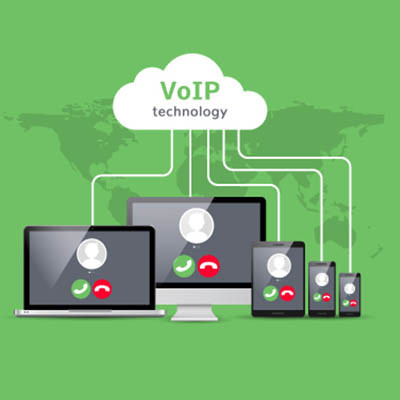
The average person spends hours a day on their phone. For the average business, finding a way to support this trend is extremely important. This is why many businesses have begun to do away from their traditional telephone system for the massive benefits that Voice over Internet Protocol brings. Today, we will outline four major benefits of hosted VoIP to help you understand that if you aren’t using VoIP, you are probably leaving money on the table.

Have you ever booted up your computer at the start of the workday only to find it slow and sluggish? Sometimes this has to do with how many startup processes are occurring when your computer is just starting to wake up. You might be able to give it a little morning jumpstart by disabling certain startup processes or programs.
Have you ever wondered how hackers manage to pull off incredible feats like bombarding networks and servers with so much traffic that they simply cannot function? None of this would be possible if not for botnets. But what is a botnet, and why is it important for your organization to understand? Let’s dive into the details.

For the average business, upgrading technology comes with some risks. Will you get the return on your investment back fast enough to make your investment worthwhile? Will the technology solve the operational problems you are trying to confront? Do you have the available capital to make significant upgrades? These questions and more can keep a business from taking advantage of the amazing benefits many new technologies can bring. Today, we thought we’d outline four signs that will tell you when it’s time to upgrade your business’ technology.

Historically there have been several methods to transfer data from one system to the next, and while the cloud has rendered many of them irrelevant and unnecessary, that doesn’t mean they aren’t used by people looking to move data quickly. Many professionals still opt to use USB flash drives to keep certain data close at hand, but how at risk does this put the data on these drives?
In today’s competitive business environment, you need every edge you can get to one-up your competition and make waves in your chosen industry. One of the best ways you can do so is by strategically implementing technology solutions that can enhance or transform the way your business operates both internally and externally.

If you use almost any Apple products, you’ll want to check for and apply an update that will prevent your devices from being spied on. Apple has just issued an emergency software update for a critical vulnerability that was recently discovered.
The new updates were pushed out on Monday, September 13th, 2021, and include a major security fix for the Apple iPhone, Apple iPad, Apple Watch, and Apple Mac computers and laptops.

What happens when your company configures something on its infrastructure incorrectly? It turns out, according to a recent data leak, that a lot can go wrong, especially in regards to cybersecurity and the privacy of sensitive records. The affected software was not an unknown third-party application, but was actually Microsoft! How did one of the world’s largest software developers put out software that potentially exposed millions of records? Let’s dig into the details.