
SouthBridge Consulting Blog
SouthBridge Consulting has been serving the Texas area since 2015, providing IT Support such as technical helpdesk support, computer support, and consulting to small and medium-sized businesses.

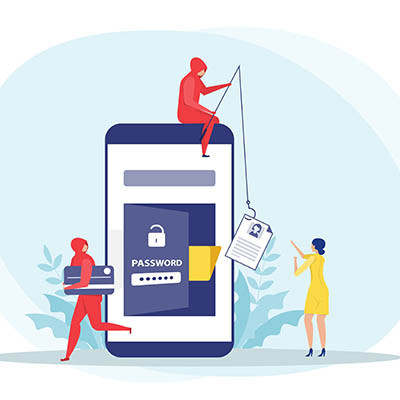
Data breaches have become all too common for small businesses over the past several years and when it seems like there is a solution to one problem, something even worse pops up. Part of a comprehensive risk management strategy is identifying problems and doing what you can to keep them from affecting your business. Let’s take a look at the major cybersecurity threats small businesses are facing in 2021 and what you can do to keep them from hurting your business.
0 Comments

Many businesses struggle with IT maintenance and management. Maybe they don’t have the resources to perform in-house maintenance due to a lack of funding and, consequently, the inability to hire full-time technicians. Maybe they believe that their technology is perfectly fine as is and doesn’t require regular maintenance. We’re here to burst that bubble; you should always have maintenance at the top of mind, and in today’s business environment, there is no excuse not to.

For the past year or so, most workers around the world were forced to work remotely in order to adhere to the strict social distancing guidelines imposed by governing bodies. Now that the time has come to return to the office, many workers are finding that their expectations are a bit different than they were previously, forcing business owners to respond.

A lot has been made about 5G and the way that it is going to significantly alter what is possible, without much mention about the other technology that will fuel this complete digital transformation. We thought that we would talk a little bit about smart technology, how your business can use it to your advantage, and what this technology needs to do to be ready for the world to come.

As a business owner, we are sure that you have your fair share of day-to-day stressors. Oftentimes, these stressors can lead to the development of bad habits. When this happens, you might get the urge to correct the bad behavior and replace it with good, productive habits. That said, it’s easier said than done to build good habits, especially when you have so much else on your plate.

Almost daily there is another data breach reported that exposes data for hundreds of thousands or millions of people. This is a troubling trend. One of the most troubling events happened recently as 700 million profiles from the social media network LinkedIn were found for sale on a popular hackers forum. What’s worse is that the company isn’t admitting that it had been breached recently. Let’s take a brief look at this situation and try to unpack what is going on with LinkedIn.

A new ransomware attack has surfaced, this time mostly targeting IT companies and their clients. The attack is specifically targeting the Kaseya platform. Kaseya is management software that many IT companies use to remotely manage and support technology. The attack in question attacked Kaseya’s supply chain through a vulnerability in its VSA software; this attack is notable because of how it targeted the supply chain, not only striking at the vendor’s clients—notably IT companies—but also their customers. Basically, this attack had a trickle-down effect that is causing widespread chaos for a massive number of businesses.

With the onset of the COVID-19 pandemic, many organizations were forced to transition to remote work, even though they would have preferred to keep operations within the office. While the transition was rough at first, these organizations may have found that remote work offers certain flexibilities that were impossible in the traditional office environment. That said, one looming threat was (and still is) a major concern for the remote workplace: security.

With such a heavy focus on remote work over the past year or so, if you have tried to procure equipment or technology solutions during this period, you may have noticed that it is much harder than usual to do so. The global chip shortage has led to many challenges for organizations, chief among them getting the parts needed to put together critical technology solutions. This opens up a whole other set of issues, though, particularly in regards to disruption of the supply chain.

All businesses store and transmit data on a regular basis. From financial spreadsheets to client information to employee records, there is no shortage of data required by most organizations to maintain operations. What would you do if all that data were to suddenly vanish into thin air, or worse, be stolen by hackers?
When you are looking to implement new technology solutions for your business, the last thing you should do is skip the planning process. You need to carefully consider all of your options, your business’ specific needs, and the various benefits that can come from all of these options. Today we will discuss how your business can choose the best technology that suits your organization and its operations.
We know, we know; you’re probably sick of seeing ransomware in headlines, and so are we, but we cannot stress enough how important having an awareness of it is for any business owner. A new study has found that businesses infected by ransomware who choose to pay up experience a different type of fallout--one that is a major cause for concern and a stark reminder that there are no guarantees with ransomware. Ever.

For some companies, their IT is like a boat to a fisherman: they could conceivably do the work without it, but they wouldn’t have a business. For this reason it is important to know how to ascertain which technology investments are right for your business at any given time. Let’s go through a few considerations decision makers should highlight when choosing new technology for their businesses.

Data recovery is a major pain point for small businesses, but not all organizations have the same resources and assets that make it possible. Small businesses in particular are more prone to forego data backup and disaster recovery because it does not provide an immediate return on investment. Well, we’re here to tell you that this mindset is wrong.

If you are looking for a way to smooth out the edges of your business, consider putting together a knowledge base that includes all policies, procedures, and other information so it is readily accessible by the people that interact within and from outside your business. Businesses that have well-documented policies and procedures have a tendency to have less difficulty onboarding new hires, fewer operational problems, and can always provide access to resources needed by employees, customers, and vendors. Today we will give you a few tips on how to successfully create a working knowledge base.

It’s no secret that new technology can be useful for a business, unfortunately too many businesses struggle with their technology implementations. When adding new tools to your business, you will need to understand that the more deliberate you are, the more success you will find. Rushing any new deployment is sure to have some types of issues. For today’s blog, we take you through some of the best practices of adding new technology to your business.

Businesses use cloud resources all the time; and, they use them for many different reasons. Some use them because they have to support a remote workforce, some use them so they don’t have to come up with large swaths of capital or don’t want to pay interest rates for financing their central hardware. Some only use them sparingly to fill in the gaps created by product and service demand.
Data privacy is a bit of a hot topic in today’s business environment, especially with high-profile hacks and ransomware attacks emerging and putting organizations at risk. In particular, the emerging concept of “privacy engineering” has a lot of businesses thinking about how they can secure their organization and future-proof their data privacy infrastructures.

Many professionals see the word “informatics” and think of one of two things. First, what the heck is it? Second, isn’t that just computer science? While the two certainly are similar and often used interchangeably, they are quite different. Let’s take a deeper dive and see what the field of informatics entails, how it can be applied to computer science and business, and why it’s important to consider for your organization.
The first half of this year has seen its fair share of ups and downs, especially on a global scale. With a global pandemic still taking the world by storm, it’s despicable that hackers would take advantage of the opportunity to make a quick buck using phishing tactics. Yet, here we are. Let’s take a look at how hackers have turned the world’s great misfortune into a boon, as well as how you can keep a lookout for these threats.